


EDITORIAL
By C4D Editorial Team
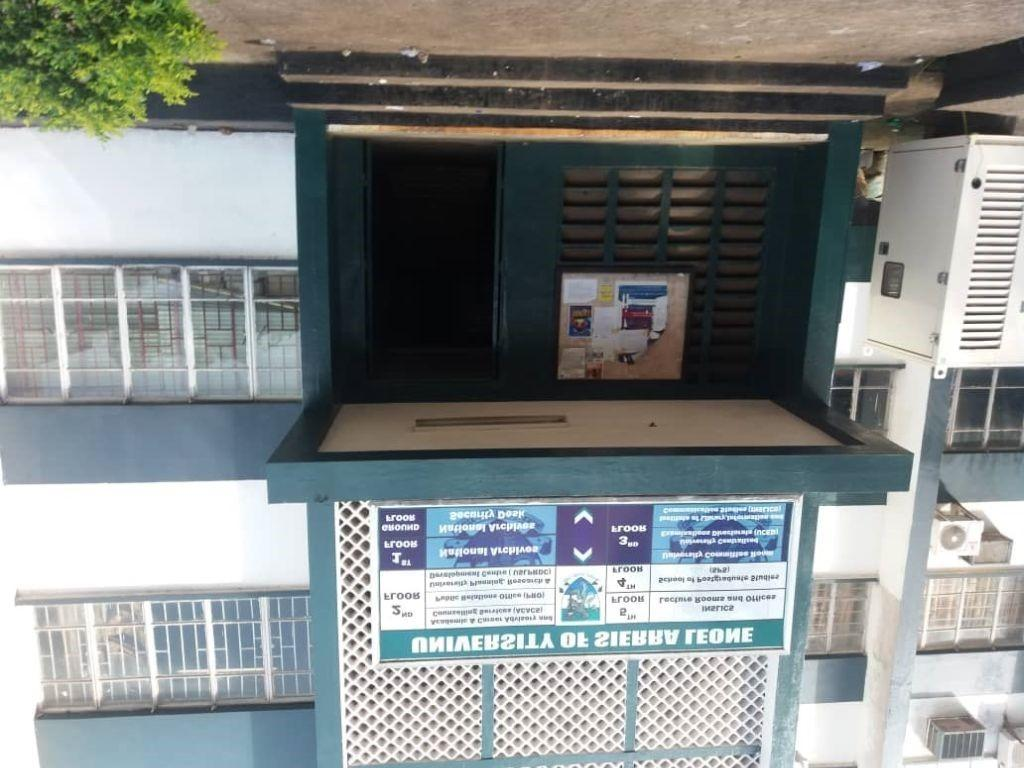
The crisis currently unfolding within Sierra Leone’s higher education sector is no longer confined to the University of Sierra Leone (USL). It has spread beyond the country’s premier university system and has now evolved into a broader national concern about political interference, abuse of ministerial authority, and the gradual destruction of university autonomy. When public institutions begin to lose their independence under the heavy weight of political influence, a dangerous moment emerges, one that threatens to undermine Sierra Leone’s higher education sector, which now appears to be approaching that critical point.
By and large, the recent findings of the Anti-Corruption Commission(ACC) regarding the University of Sierra Leone should not be viewed merely as an administrative review. Beneath the language of procedures, appointments, investigations, and governance concerns lies a far more troubling national reality: the growing intrusion of political authority into the administration of universities.
What is emerging is not simply a governance dispute, but a deeper struggle over the future independence of academic institutions in Sierra Leone. Universities are meant to function as centres of intellectual freedom, merit, and institutional integrity, not as extensions of political power or ministerial control. Yet the allegations and findings now entering the public domain suggest a pattern in which political considerations are increasingly overshadowing established academic and administrative processes. If left unchecked, this trend risks weakening public confidence in higher education, undermining professional standards, and turning universities into battlegrounds for political influence rather than centres of learning and national development.
The issues raised in the ACC report are too serious to ignore
The report questioned the controversial dissolution of the University Court before the completion of its lawful tenure. It highlighted overlapping appointments within the university system and criticised aspects of internal administrative procedures and investigations. It also raised concerns regarding failures to properly involve oversight institutions such as the Audit Service Sierra Leone (ASSL) and the ACC itself during sensitive governance processes. These may sound technical to ordinary citizens, but their implications are enormous.
Universities operate through laws, statutes, councils, senates, and established governance systems precisely to protect them from arbitrary political influence. Once external political pressure begins to interfere with those structures, institutional stability collapses.
Perhaps even more troubling is the issue linked to the transfer of a research project from the College of Medicine and Allied Health Sciences (COMAHS) to a private entity reportedly associated with the Minister after assuming public office. That single issue raises serious ethical and governance concerns that go beyond simple administrative oversight.
Research grants awarded to public institutions are public resources. They are meant to strengthen universities, support national development, expand medical research, and improve institutional capacity. When such projects are reportedly transferred into private structures connected to public officials, legitimate questions naturally arise about conflict of interest, abuse of office, and the misuse of institutional influence.
This is why many Sierra Leoneans are beginning to view the ACC report as more than just an anti-corruption document. It has become an indirect exposure of the dangerous politicisation of higher education governance.
Unfortunately, the concerns do not end at USL
At Milton Margai Technical University, accusations of ministerial interference have intensified following the suspension of the Vice Chancellor and Principal, a development that reportedly left the university trapped in administrative uncertainty and institutional standstill. Across the academic community, there is growing fear that universities are gradually becoming vulnerable to direct political control.
That should alarm every citizen
No country can build a strong education system where ministers appear more powerful than university statutes themselves.
Universities are not political ministries. They are centres of independent thought, research, intellectual debate, and professional administration. They are supposed to challenge power, generate ideas, and produce national leadership. Once fear and political pressure begin to dominate university environments, academic freedom starts to die quietly.
Africa has already seen the damage political interference can cause within higher education. In many countries, governments that attempted to control universities ultimately weakened research quality, discouraged independent thinking, destroyed institutional credibility, and created campuses driven by fear instead of excellence.
Sierra Leone must not repeat those mistakes
The Ministry of Technical and Higher Education certainly has oversight responsibilities. No one disputes that. But there is a clear difference between supervision and interference. There is a difference between policy coordination and institutional domination.
When ministers become deeply involved in suspensions, dissolutions, investigations, appointments, and internal university conflicts, public confidence in the neutrality of the education system begins to disappear.
This is not healthy for democracy.
Strong universities are essential for national progress. They produce the lawyers who defend justice, the doctors who save lives, the engineers who build infrastructure, the teachers who educate future generations, and the researchers who drive innovation. Weakening universities through political interference weakens the nation itself.
What Sierra Leone needs now is not greater political control over universities but stronger institutional safeguards that protect their independence. Parliament, civil society, lecturers’ unions, student bodies, and governance experts must speak firmly in defence of university autonomy before the situation deteriorates further.
The ACC report should be treated as a warning sign
The Anti-Corruption Commission report should be treated as a serious warning sign. If universities lose their independence today, the country may tomorrow lose the very institutions capable of defending truth, accountability, and democratic values.
Public office is temporary, but institutions are meant to endure.
That is why Sierra Leone’s universities must remain governed by law, academic procedures, and institutional integrity—not by fear, political loyalty, or ministerial influence.


As a Bangladeshi player I am so glad I found this app. It works perfectly on my data connection and the games load without any lag. The rewards system feels generous and I never had any issues with my account. Highly recommended for locals looking for a trustworthy spot. banglawin88app