


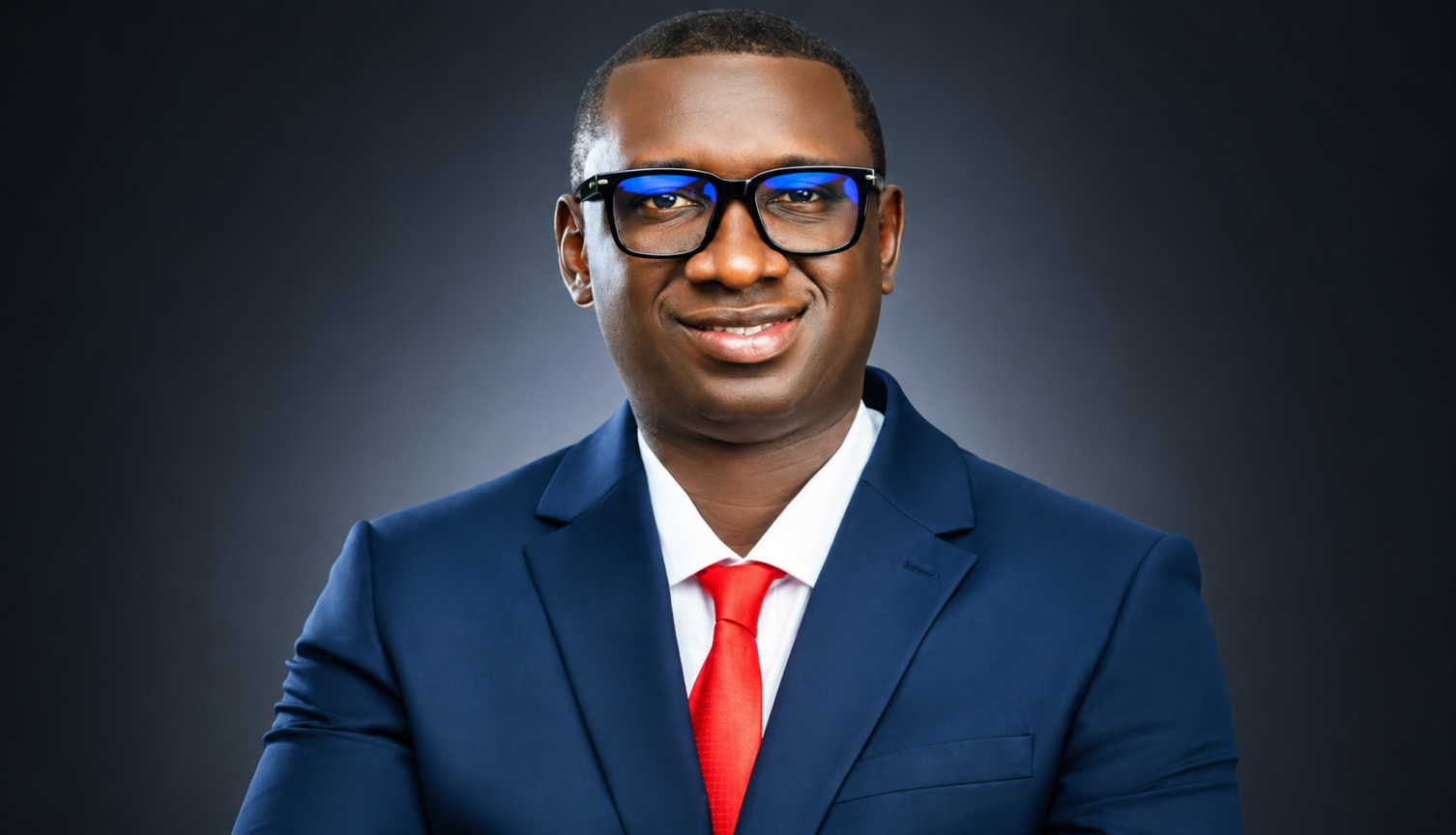
By Marcus Bangura
If Part I examined the preparation and experience that shaped Dr. Ibrahim Bangura’s emergence on Sierra Leone’s political landscape, Part II explores another important question: What distinguishes his leadership style from that of many contemporary politicians?
In every democracy, leadership is measured not only by winning elections but also by the ability to inspire confidence, unite people, and provide practical solutions to national challenges. Increasingly, citizens expect leaders to demonstrate integrity, competence, accessibility, and vision rather than rely solely on campaign promises.
Many observers believe Dr. Bangura’s growing appeal extends beyond his academic credentials and professional achievements. They point to a leadership style founded on humility, dialogue, accessibility, service, and national unity.
Leadership Rooted in Humility
Humility is one of the qualities most frequently associated with Dr. Bangura. While some politicians equate leadership with distance and authority, he appears to embrace a different philosophy—that leaders gain respect by remaining approachable, respectful, and attentive to ordinary citizens.
His calm disposition and willingness to engage people from different backgrounds have strengthened the perception that he sees leadership as service rather than status. At a time when many Sierra Leoneans are frustrated by leaders who appear only during elections, citizens increasingly seek someone who will listen, understand their concerns, and remain connected to everyday realities.
Accessibility and Engagement
Another defining feature of Dr. Bangura’s appeal is his accessibility. Through community visits, policy forums, academic discussions, social media, and engagements with students, professionals, traditional leaders, civil society, business groups, and the diaspora, he has maintained a visible public presence that many regard as genuine rather than symbolic.
Accessibility is more than good public relations; it is essential to democratic leadership. Leaders who remain connected to citizens are better able to understand public concerns, explain policies, and respond to criticism.
Those who have attended his public engagements often note his willingness to encourage questions, listen to opposing views, and engage respectfully with critics. In a political environment where disagreement is sometimes treated as hostility, this approach has strengthened his image as a leader who values dialogue over dictation. His growing appeal beyond the APC suggests that he understands public trust must be earned before political support can be requested.
Calm Leadership in a Polarised Environment
Modern politics often rewards confrontation and sensational rhetoric. Public debate can easily become dominated by personal attacks instead of serious policy discussion.
Against this backdrop, many observers regard Dr. Bangura’s calm and measured communication style as one of his defining strengths. Rather than relying on inflammatory language, he generally frames discussions around ideas, evidence, institutional reform, and long-term development.
This does not mean avoiding difficult issues. Instead, he appears to favour dialogue, persuasion, and consensus over unnecessary confrontation—a style that particularly resonates with many young professionals and educated voters.
A Politics of Respect
Political competition is essential in democracy, but when rivalry becomes hatred, intimidation, or regional division, democracy suffers.
Dr. Bangura has generally projected himself as a leader focused on ideas, institutional reform, and national development rather than personal attacks. While democracy requires disagreement and debate, he appears to recognise that political differences should never undermine national unity.
His growing acceptance beyond party lines reflects a style of politics that values inclusion, respect, and constructive engagement.
Connecting Across Generations
Another notable aspect of Dr. Bangura’s popularity is his ability to connect with different generations.
Young Sierra Leoneans identify with his emphasis on education, innovation, entrepreneurship, skills development, and youth participation. Older citizens often appreciate his respect for traditional institutions and democratic values.
By combining professional experience with an understanding of youthful aspirations, he presents himself as a bridge between generations at a time when Sierra Leone needs both continuity and change.
Building Bridges
Sierra Leone’s challenges cannot be solved through political, regional, or ethnic division. National development requires cooperation across parties, communities, and generations.
Dr. Bangura’s increasing acceptance among people from different political backgrounds suggests that many see him as someone capable of promoting dialogue and national cohesion.
Leadership beyond politics requires governing all citizens, regardless of how they voted. It demands respect for democratic institutions, protection of differing opinions, appointments based on competence, and the willingness to place national interest above partisan considerations.
Service Before Position
One of the strongest arguments advanced by Dr. Bangura’s supporters is that his public service predates his electoral ambitions.
Before entering active politics, he established a professional reputation in governance, peacebuilding, conflict prevention, institutional development, and policy reform within Sierra Leone and across West Africa.
This record has reinforced the perception that his political aspirations are rooted in years of preparation and service rather than personal ambition. It also reflects his belief that public office is a trust—not a reward for loyalty or a path to privilege—but a responsibility to improve citizens’ lives.
Supporters argue that his experience has given him a practical understanding of the country’s governance challenges and strengthened confidence in his readiness to serve.
Leadership for National Renewal
Dr. Bangura’s political philosophy also centres on national renewal. He has consistently emphasised the need for stronger institutions, economic diversification, technological innovation, youth empowerment, accountability, and inclusive governance.
His supporters believe Sierra Leone’s future depends on leaders who can combine experience with fresh thinking and professional competence with political leadership.
Whether discussing education, economic growth, governance, or institutional reform, his public interventions have generally focused on long-term national transformation rather than short-term political advantage.
Beyond Popularity
Popularity alone does not guarantee effective leadership. History has shown that successful leadership depends on competence, integrity, sound judgment, organisation, and the ability to deliver meaningful results.
Citizens will ultimately judge Dr. Bangura not only by his message of healing, unity, and renewal but also by the policies he proposes and his ability to translate those ideas into practical improvements in governance, employment, education, healthcare, and economic development.
Conclusion
Leadership is ultimately measured by preparation, character, service, and the confidence it inspires.
For many Sierra Leoneans, Dr. Ibrahim Bangura represents a leadership style built on humility, accessibility, dialogue, competence, and national unity. Whether these qualities translate into electoral success remains for the people to decide.
What is increasingly evident, however, is that his emergence has broadened the national conversation about the kind of leadership Sierra Leone needs for the future.
To Be Continued…
Part III will move beyond leadership qualities to examine Dr. Ibrahim Bangura’s policy vision for economic transformation, institutional reform, youth empowerment, democratic governance, and national development.
“Together, let us heal, unite, and build a better Sierra Leone.”


[…] In Part II of my special commentary series, I focused on the qualities surrounding the credentials: humility, accessibility, respectful dialogue and the ability to engage students, professionals, traditional authorities, civil society, businesspeople and the diaspora. In our highly polarised environment, calmness should not be mistaken for weakness. The capacity to listen without insulting, to disagree without creating enemies and to connect young people with older generations is a political strength. […]