


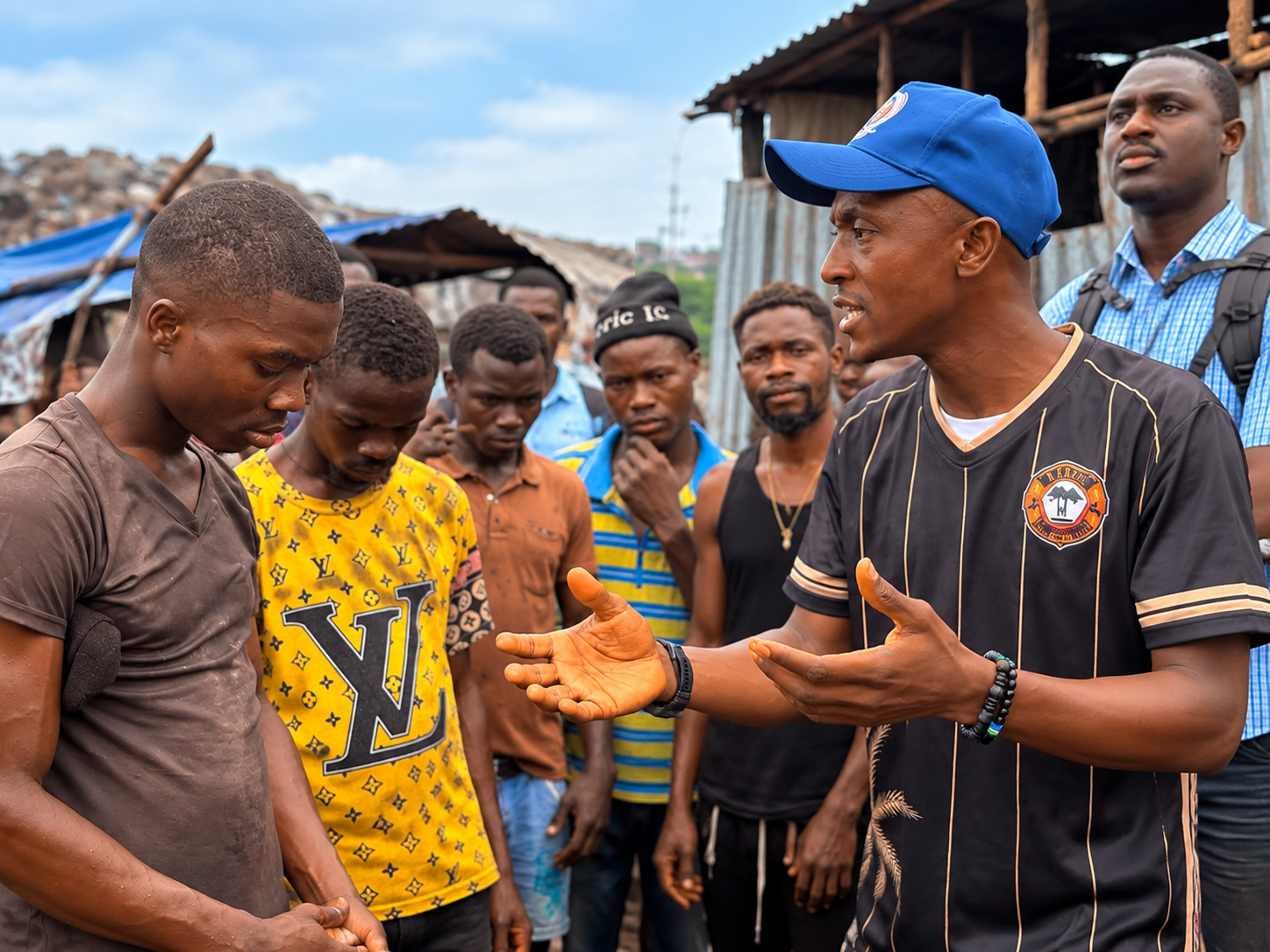
MMTU Social Work Department and Mental Health Advocacy Network deliver sensitisation and basic health support to vulnerable individuals.
By Marcus Bangura
23 October 2026 | FREETOWN, SIERRA LEONE
The Mental Health Advocacy Network (MHAN) and the Department of Social Work at Milton Margai Technical University (MMTU) have provided mental health sensitisation and basic health support to vulnerable individuals experiencing kush use and other substance-related challenges at the East End Freetown Dumping Site in Bumeh.
Ibrahim Hassan Koroma, Executive Director of MHAN and Head of the Department (HOD) of Social Work at MMTU, led the outreach, which was held on Monday, 19 October. Social work educators, university students, and medical personnel engaged with individuals on site, where participants received mental health education, free wound-cleaning services, condoms, and antibiotics.
The intervention highlights the importance of reaching vulnerable communities with health information and basic services. It also raises a critical question: how can people who need further medical care, counselling or rehabilitation access appropriate support beyond a community outreach?
Taking Mental Health Awareness to the Community

The initiative formed part of activities commemorating World Mental Health Day, observed annually on 10 October. It sought to bring mental health awareness closer to individuals who may face barriers to accessing conventional healthcare services.
During the engagement, participants were sensitised on the potential effects of kush and other substances on physical health, mental well-being, family relationships and society. Discussions also emphasised the importance of seeking appropriate assistance and treating people experiencing substance-use challenges with dignity rather than stigma or discrimination.
Alongside sensitisation, participants received free wound-cleaning services. Condoms and antibiotics were also distributed as part of the outreach’s health-support activities. Antibiotics should be used under appropriate medical guidance following assessment to ensure they are suitable for the condition being treated.
The programme brought together Mr Koroma, Amara Dumbuya, a Social Work Lecturer at MMTU, final-year and other Social Work students, medical personnel and journalists who documented the engagement.
Their participation reflected a collaborative approach combining academic knowledge, practical social work, health support and public communication to engage with people facing multiple vulnerabilities.
Bridging the Classroom and the Community
For participating students, the outreach provided an opportunity to connect classroom learning with the practical realities of social work. Direct engagement exposed them to the complex circumstances associated with substance use, homelessness and barriers to healthcare.
The exercise also highlighted the role of social workers in identifying vulnerable populations, promoting access to essential services, facilitating referrals and addressing social challenges that affect health and well-being.
By taking the engagement directly to the dumping site, the initiative demonstrated the importance of reaching people within their immediate environments rather than relying exclusively on conventional institutional settings.
Such community-based engagement can help students better understand how living conditions, social exclusion and limited access to services may affect the well-being of vulnerable individuals.
Beyond Awareness: The Challenge of Access to Care

Although sensitisation can improve understanding of substance-use challenges, it cannot replace professional assessment, medical treatment, psychosocial support and rehabilitation where these are needed.
People experiencing substance-use difficulties may face stigma, financial hardship, unstable living conditions and other barriers that make seeking or maintaining treatment difficult. Addressing these challenges requires coordinated health and social interventions that respect human dignity and create practical pathways towards recovery and social reintegration.
Collaboration among universities, healthcare providers, civil society organisations and relevant government institutions could help strengthen referral arrangements and improve access to appropriate services. Community outreach can serve as an important point of contact, particularly for people who may otherwise struggle to engage with formal healthcare systems.
For Sierra Leone, the wider challenge is to ensure that public awareness initiatives form part of a broader response to substance-use difficulties, one that combines prevention, accessible healthcare, counselling and rehabilitation where appropriate.
From Outreach to Impact
The Bumeh initiative demonstrates the value of taking mental health advocacy directly into vulnerable communities. It also illustrates how universities and civil society networks can promote public awareness while giving students opportunities to apply their academic training in practical settings.
The effectiveness of such interventions ultimately depends on whether they help connect people with the services they need. Cooperation among social workers, healthcare professionals, educational institutions and other relevant stakeholders remains important in addressing the complex circumstances associated with substance use and social vulnerability.
Beyond raising awareness, the task is to ensure that vulnerable people are treated with dignity and can access appropriate care when they need it.
C4D MEDIA EDITORIAL NOTE:
This report is based on information supplied about the outreach. C4D Media has not independently verified all details of the activities described

